1. Treat EC as a signal, not an ingredient list
Electrical conductivity measures how well a solution conducts electricity and is widely used as an indicator of total dissolved salts. It is a useful first number, but it does not identify the ions creating that reading. Two water sources can have similar EC values and still present different nutrient and salinity questions.
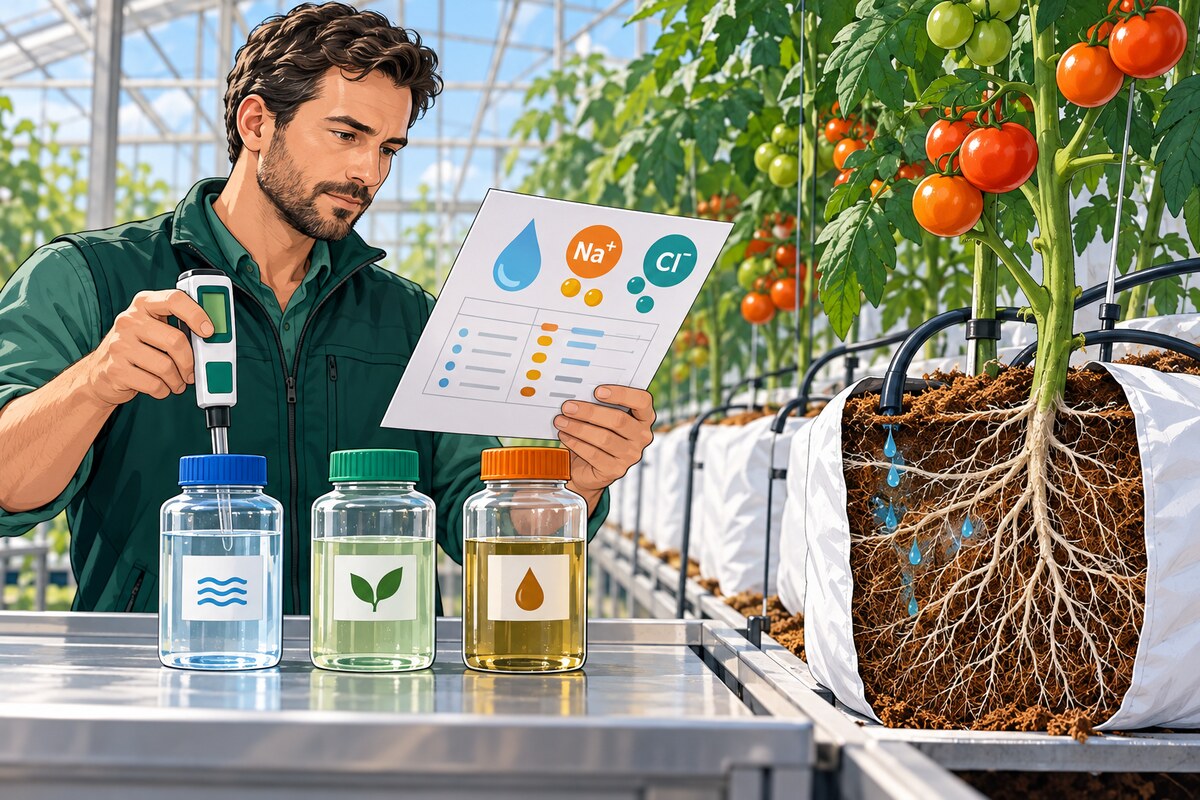
Penn State Extension’s greenhouse water-quality toolkit notes that water high in total dissolved solids often contains salts such as sodium chloride. The practical lesson is not to guess the composition from EC. Ask for a laboratory analysis that reports the individual ions.
When someone says “the water EC is acceptable,” ask what the sodium and chloride results are, which units were used, and whether the sample was raw water, treated water or final nutrient solution.
2. Read the full water report together
A useful irrigation-water report is a set of connected measurements. pH describes acidity or basicity; alkalinity describes acid-neutralising capacity; EC or total dissolved solids describes the overall salt load; and individual-ion results show what contributes to that load.
Penn State’s guide to interpreting irrigation-water tests discusses sodium and chloride separately because crop sensitivity varies and because one EC value cannot show which ion is present. Calcium, magnesium, bicarbonate, boron and other reported elements may also influence how an adviser interprets the same water source.
| Result | What it helps you ask |
|---|---|
| EC or TDS | How large is the total dissolved-salt load? |
| Sodium and chloride | Are specific ions likely to need crop-specific review? |
| Calcium and magnesium | What does the source water already contribute? |
| pH and alkalinity | How resistant is the water to a pH change over repeated irrigation? |
| Units and sample date | Are the results comparable with earlier reports? |
Do not copy a threshold from another crop or test method. Ask an agronomist or laboratory to interpret the report for the crop, growth stage, climate and production system.
3. Keep raw water, feed and drain samples separate
A borewell sample, a nutrient tank and drainage collected from a growbag answer different questions. Label every bottle with the source, sampling point, date and whether any treatment or fertiliser had already been added. If water sources are blended, record the blend in use on that day.
Use clean containers and follow the laboratory’s instructions. Avoid turning one convenient drain sample into a greenhouse-wide conclusion. Sample representative locations, and keep healthy and affected zones separate when investigating a problem.
For substrate sampling, Oklahoma State University Extension recommends consistent timing, representative sampling and detailed production records. It also warns that interpretations belong to the test method used. This is especially important when comparing supplier data, laboratory reports and on-site readings.
4. Watch what repeated irrigation does in the root zone
Water quality becomes a root-zone issue through repetition. Fertiliser salts, source-water salts, crop uptake, evaporation, irrigation distribution, drainage and recirculation all influence what remains around the roots. A result from the source therefore cannot replace measurements made during production.
UMass Extension’s greenhouse salinity guidance explains that adding soluble fertiliser to water with an already elevated EC increases the risk of salt injury. That does not mean every high reading has the same cause. Review the source water, feed solution and substrate trend together.
Check irrigation uniformity at the beginning, middle and end of a zone. Confirm that drainage openings are usable and that bags are not sitting in retained solution. Compare like-for-like samples over time instead of reacting to a single reading taken from the wettest or driest unit.
5. Use a repeatable monitoring record
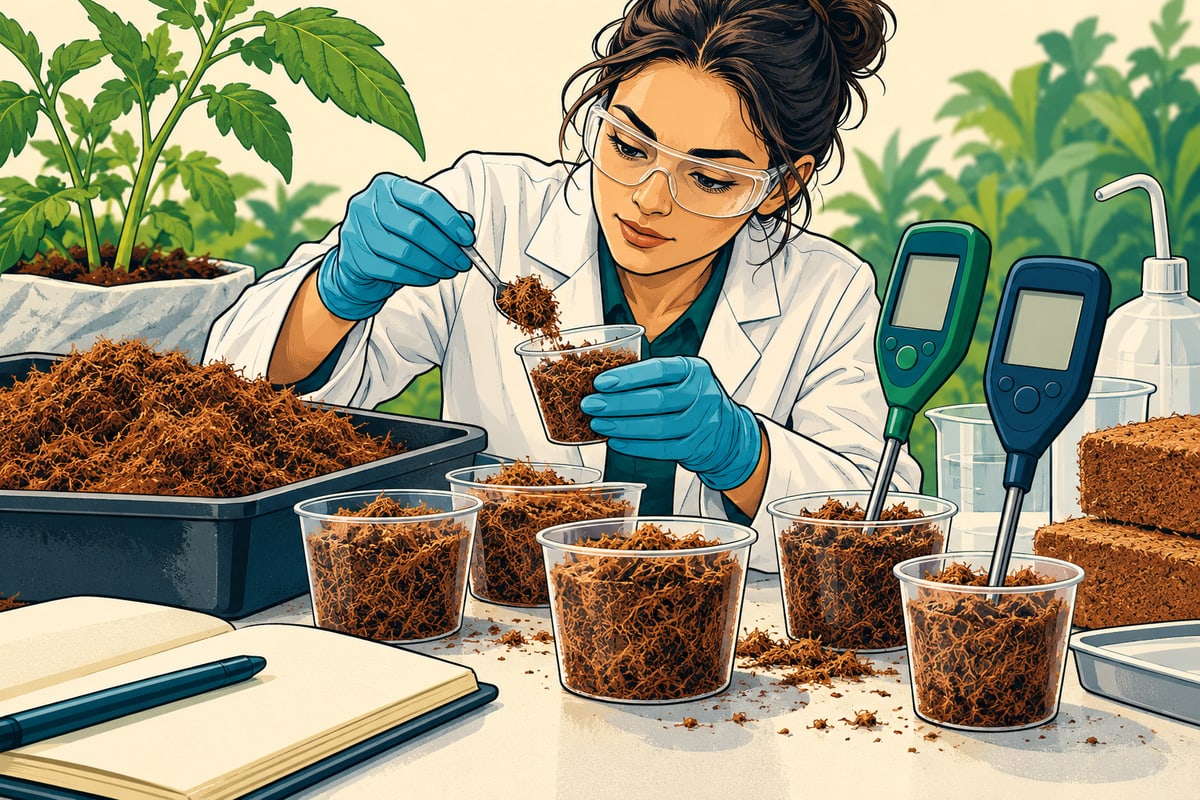
Write down more than the meter value. Record the meter calibration, temperature compensation if relevant, sample type, extraction method, crop stage, irrigation event and location. A trend only becomes useful when the measurements were collected in a comparable way.
Purdue Extension’s soilless-substrate monitoring guide emphasises calibrated instruments, consistent sampling and the correct interpretation range for each extraction method. A PourThru result, a dilution extract and a laboratory saturated-media extract should not be treated as interchangeable.
- Keep the latest full irrigation-water analysis with the crop record.
- Log raw water, final feed and root-zone measurements as separate sample types.
- Compare several representative growbags rather than one convenient unit.
- Investigate a rising trend before changing fertiliser concentration.
- Escalate possible crop toxicity or root damage to a qualified adviser or diagnostic laboratory.
6. Put water quality into the cocopeat brief
When trialling a cocopeat product, share the irrigation-water report, crop, container or slab dimensions, drainage arrangement and nutrient programme. Keep the approved coir sample and its stated test method linked to the same trial record. That makes it easier to distinguish a source-water issue from a feed, equipment or material change.
For the difference between water pH and alkalinity, read our irrigation-water alkalinity guide. For extraction methods and supplier reports, see cocopeat EC and pH testing. If plants are already showing symptoms, use the ordered checks in our yellow-leaf troubleshooting guide.
The takeaway is simple: EC tells you how much electrical conductivity the dissolved salts create. A complete water analysis helps show what is creating it. In cocopeat production, you need both the overview and the ingredients.
PLAN YOUR NEXT ORDER
Turn your requirements into a clear specification.
Share your application, preferred format and quantity with Teral.
Discuss your crop, water and substrate requirementsSources and further reading
Sources support the factual background; analysis and buying checklists are Teral editorial guidance. Check later notices before making a time-sensitive decision.
- Penn State Extension — A Water Quality Toolkit for Greenhouse and Nursery Production
- Penn State Extension — Interpreting Irrigation Water Tests
- UMass Extension — Floriculture Water Quality Project: Salinity
- Oklahoma State University Extension — Greenhouse Growth Media Sampling, Testing and Interpretations
- Purdue Extension — pH and Electrical Conductivity Measurements in Soilless Substrates