
One water sample, three different questions
pH describes how acidic or basic a solution is. Alkalinity describes its capacity to neutralise acid, commonly associated with bicarbonates and carbonates. EC indicates dissolved salts. Each answers a different question; a handheld pH reading cannot supply all three answers.
Purdue Extension’s alkalinity guide explains that water with a high pH does not necessarily have high alkalinity. Repeated irrigation with high-alkalinity water can push substrate pH upwards. Very low alkalinity can also require attention, especially with acid-forming fertilisers.
When a crop’s substrate pH is drifting, ask for the water alkalinity result alongside the pH reading before changing the feeding programme.
Read the report before changing the recipe
Request a laboratory irrigation-water analysis. Penn State’s irrigation-water testing programme lists pH, total alkalinity, carbonates, bicarbonates, EC, calcium, magnesium, sodium and chloride among its basic measurements. These results give an adviser more useful context than a photograph of a meter display.
| Report item | Question to ask |
|---|---|
| pH and alkalinity | What do both results mean for this crop and container? |
| Units | Is alkalinity reported as mg/L CaCO₃, meq/L or another basis? |
| EC and individual ions | Which salts and nutrients does the source water contribute? |
| Sample identity | Was this raw water, treated water or the final nutrient solution? |
Keep those sample types separate. Label the water source, collection point and date, and follow the laboratory’s sampling instructions. Penn State also offers a fuller nutrient analysis for fertigation and recirculating water.
Watch the cocopeat root zone as well
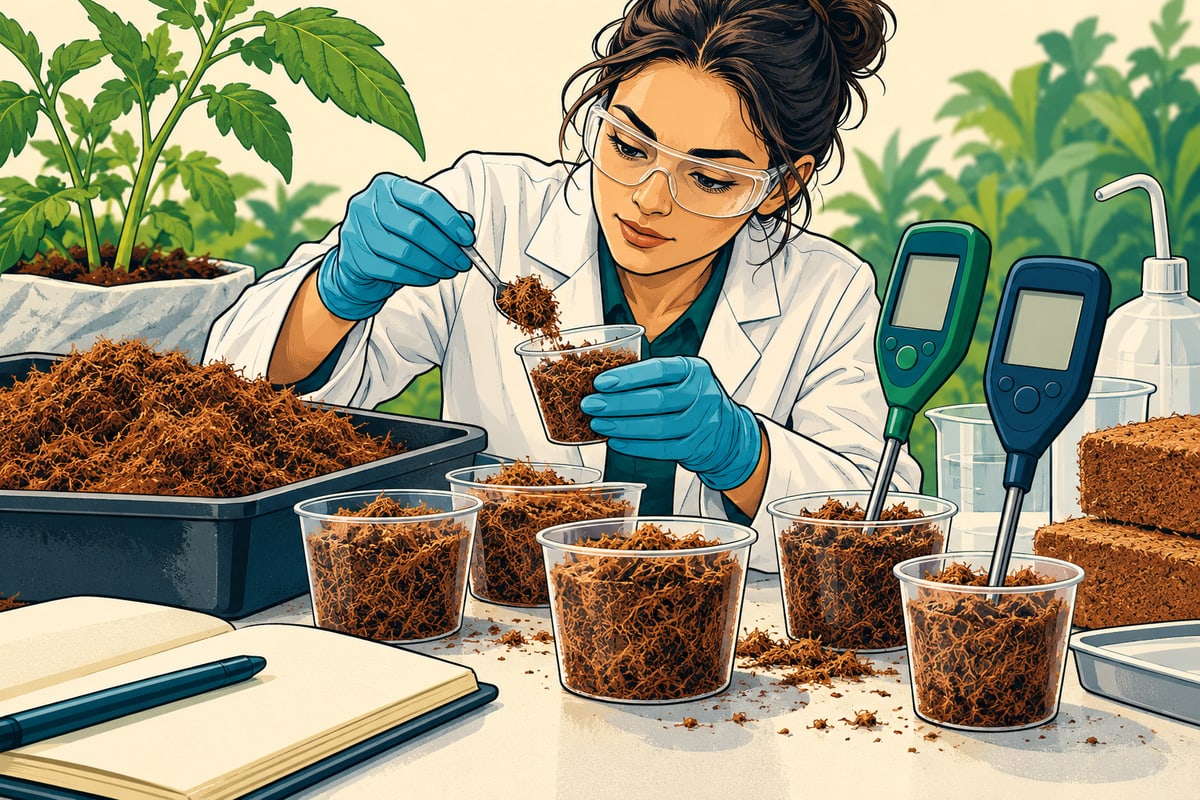
A water report is a starting point. Measure the growing medium during production too. Purdue’s substrate-monitoring guidance recommends calibrated instruments, consistent sampling and records over time. EC interpretation depends on the extraction method, so record the method beside each result.
Use a log with columns for date, crop stage, sample location, feed pH/EC, substrate pH/EC and recent management changes. Mark an emitter repair or a fertiliser change when it happens. This simple record helps your adviser distinguish a trend from an isolated reading.
For comparing laboratory results with a supplier’s certificate, read our cocopeat EC and pH testing guide. For product-treatment terminology, see low EC versus buffered cocopeat.
Choose a correction for the actual growing system
Purdue notes that crop, substrate, fertiliser, container size and production duration all influence how alkalinity affects root-zone pH. There is no universal acid dose that can be chosen from water pH alone. Ask an agronomist or irrigation specialist to interpret the report and set crop-specific targets.
If acidification is appropriate, the programme must account for the acid product, concentration and nutrients it contributes. Have trained staff verify treatment and injection equipment; avoid improvising a concentrated-acid recipe from a single reading.
For a substrate trial, retain the starting water report and the approved coir sample reference together. Trial notes become much easier to interpret when the water, material and management records belong to the same crop.
A practical next step for this week
UMass Extension recommends regular laboratory water testing, with more frequent checks when water quality changes. Its guidance also identifies alkalinity and soluble salts as minimum testing priorities.
- Locate the latest water report and check whether alkalinity was measured.
- Agree a repeatable substrate sampling method with your adviser.
- Choose representative crop locations and begin a dated log.
- Review the water report and root-zone trend together before making a correction.
When discussing loose coir media or another substrate format with Teral, include your crop, container and water analysis in the brief. A clearer growing-system description makes the sample discussion more productive.
PLAN YOUR NEXT ORDER
Turn your requirements into a clear specification.
Share your application, preferred format and quantity with Teral.
Discuss your crop and substrate requirementsSources and further reading
Sources support the factual background; analysis and buying checklists are Teral editorial guidance. Check later notices before making a time-sensitive decision.