Why strawberry bags deserve their own drainage layout
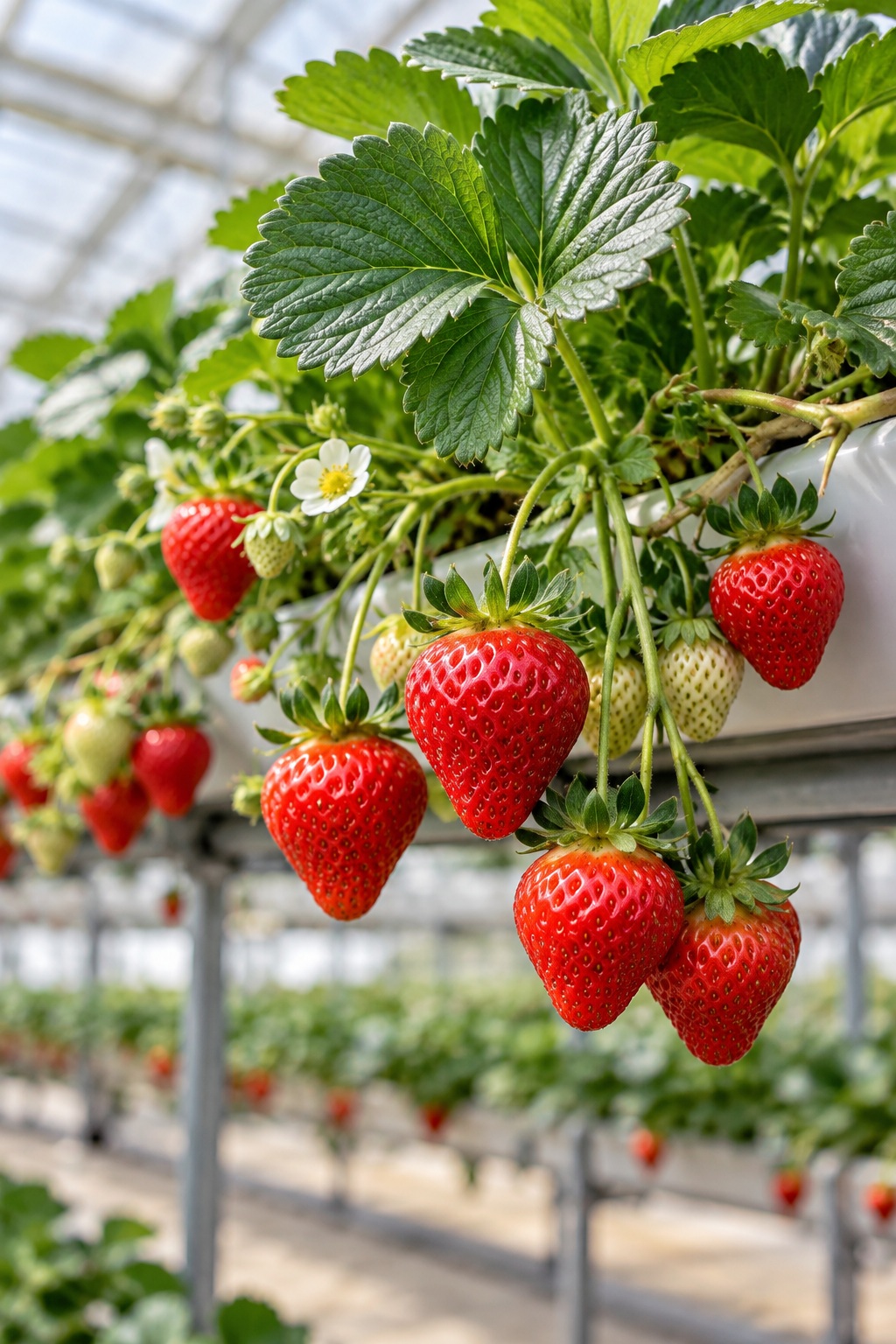
Teral’s strawberry layout offers additional drainage openings compared with its other crop layouts. The final number and position should match the bag dimensions, media and supporting system.
That is a product-design choice, not a universal agronomic hole count. Ohio State’s controlled-environment berry guidance explains that container geometry changes drainage even when substrate volume stays the same. A pattern copied from a taller vegetable slab may therefore be an unsuitable starting point for a different strawberry format.
Think of the bag and its support as one assembly. Drainage openings must remain accessible after the bag expands, settles and sits in its growing position. Count is only one part of that assessment.
Planting openings and drainage openings do different jobs
| Opening | Purpose | What to specify |
|---|---|---|
| Planting opening | Accommodates the nursery plant or propagation unit | Shape, dimensions, spacing and number |
| Drainage opening | Provides an outlet from the bag | Slit or hole pattern, position and clearance |
| Irrigation access | Allows the chosen irrigation arrangement | Location and compatibility with the system |
A planting hole in the top film is not a substitute for a drainage outlet. Likewise, adding lower openings does not correct a mismatch between the nursery unit and the planting aperture. Treat these as separate items in the enquiry, even if they appear on the same drawing.
Follow the water beyond the bag
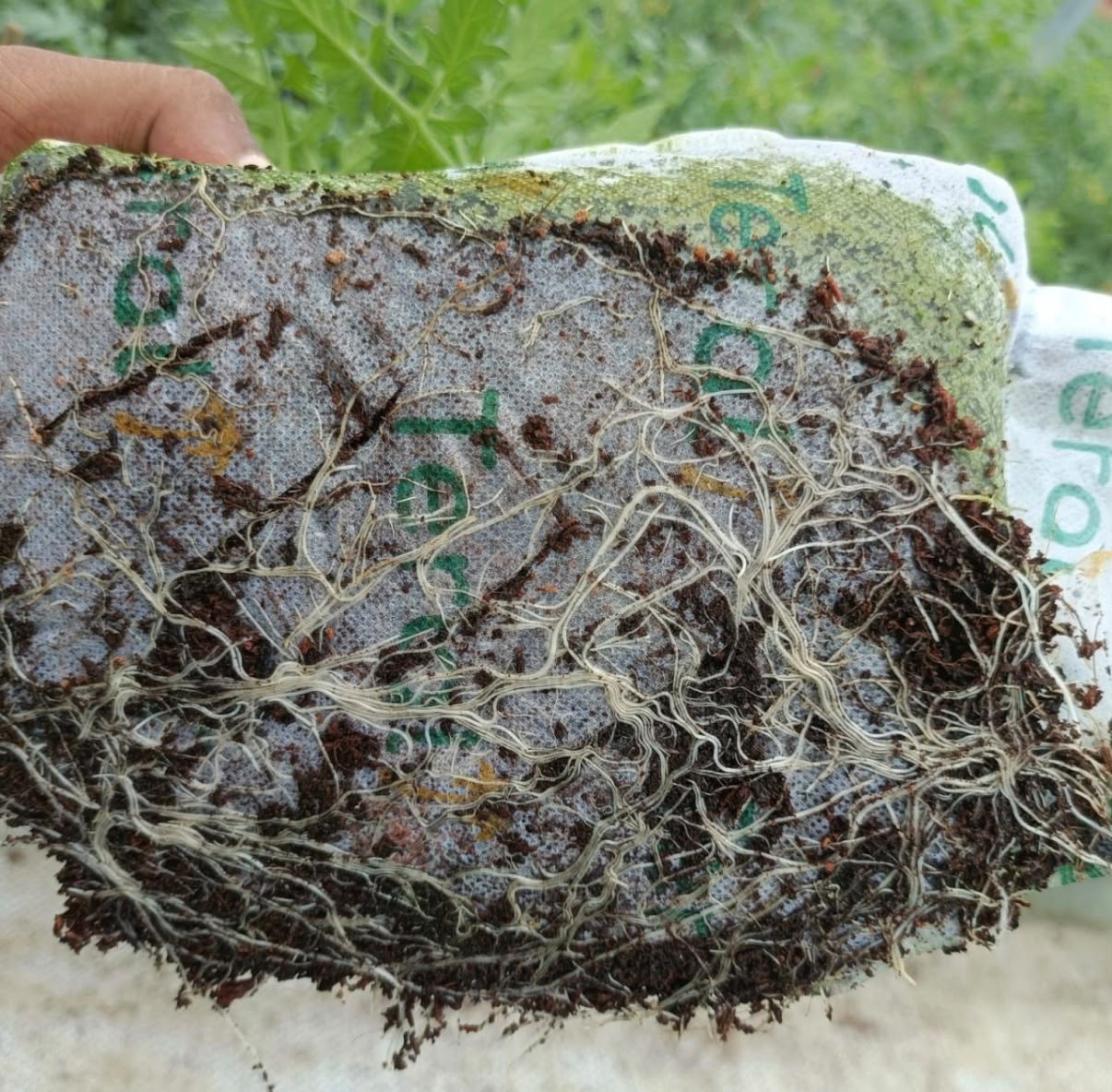
Check whether the bag stands on a flat surface, a gutter or another support. An outlet positioned against a solid surface may not work as intended. Then identify the route from the outlet to collection: a suitable opening is of little help if discharged water remains around the bag.
Do not infer drainage performance from a dry photograph. Ask the project team to assess the filled bag on its intended support and observe whether outlets remain unobstructed. The aim is a workable arrangement that can be inspected, not an arbitrary number of extra cuts.
Keep substrate and container decisions connected
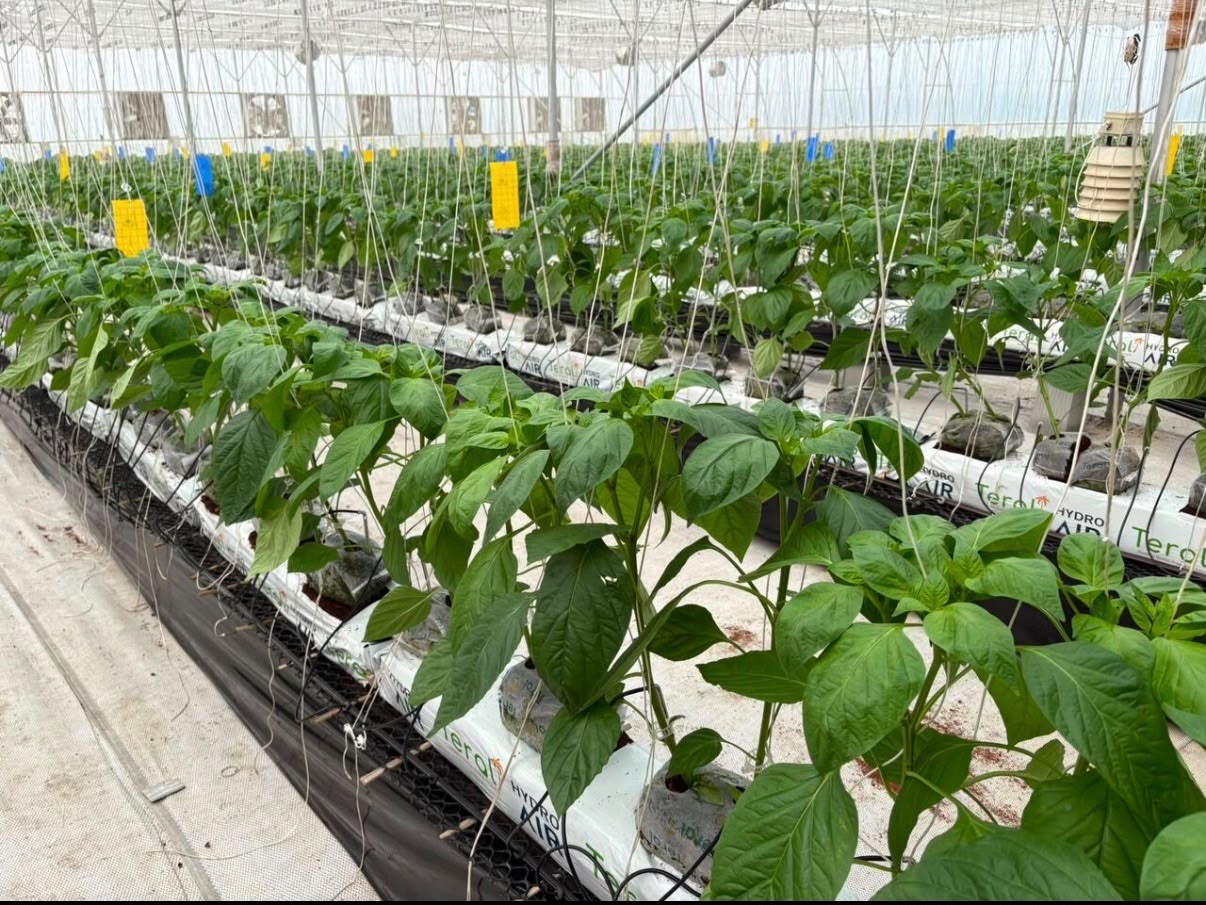
Particle structure, filling and container height influence the distribution of air and water in growing media. Research and extension guidance on greenhouse strawberry substrates treats the substrate as part of the production system, rather than a stand-alone ingredient choice.
For a Teral order, record the expanded bag size alongside the media grade and treatment. Changing the grade or dimensions after approving a drainage drawing should trigger a review of that drawing. A familiar layout is useful only while the assumptions behind it remain valid.
Send a brief that the supplier can work from
- State the expanded length, width and height with units.
- Show the nursery unit and required planting positions.
- Mark the proposed drainage outlets and their clearance.
- Include the support or gutter cross-section.
- Identify the media grade, quantity and delivery destination.
The Teral strawberry page lets you explore a crop-specific bag layout. Use it to communicate your requirements, then agree the final specification with the sales team. For the broader buying process, see our growbag dimensions and drainage checklist.
Technical references
Background reading from universities and horticultural research. Teral product options are subject to the agreed order specification.